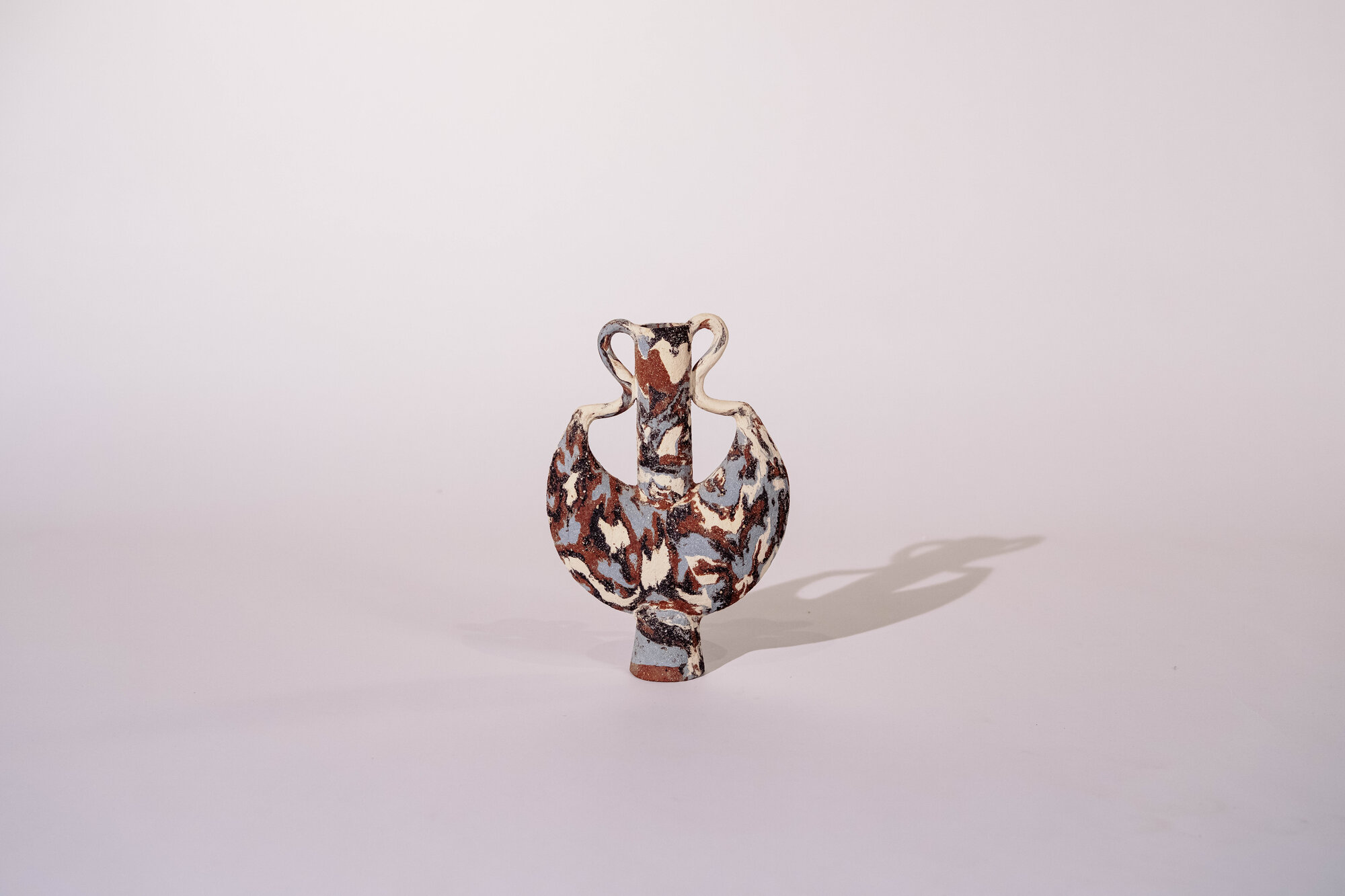
Nerikomi vase
68,600 + GST
.jpg)
introduction
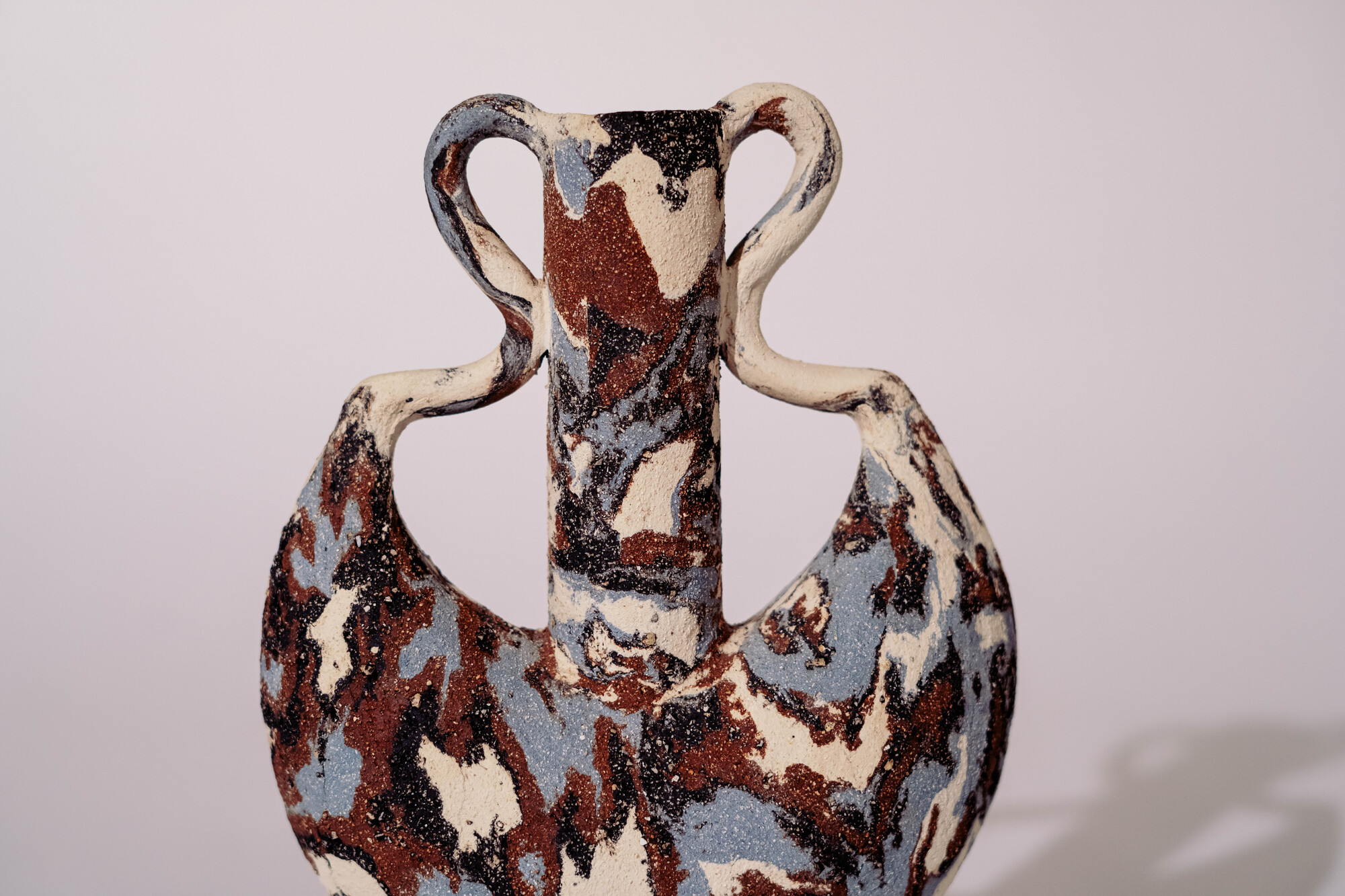
Three clays are intertwined, cut, and rolled using the nerikomi technique. Closely resembling the ancient process of making Damascus steel, this method gives the piece its striking visual effect. The surface is then painstakingly wiped back to reveal the texture of the grog—fired and crushed clay—embedded within the form.
reflection
My work speaks to sonder through time rather than just through people. By using historical ceramic processes, I acknowledge the countless hands, lives, and quiet decisions embedded within these techniques. These methods invite us to imagine the makers whose full lives and intentions are largely unknown, yet whose presence remains through the shared knowledge of material and craft passed down over generations. Each technique carries unseen histories and human experience beyond the finished object. The visible maker’s marks act as traces of touch and making, reminding us that each piece is part of a much larger continuum of lived experience, shaped over time through anonymous gestures, culture, and memory.
.jpg)
.jpg)