introduction
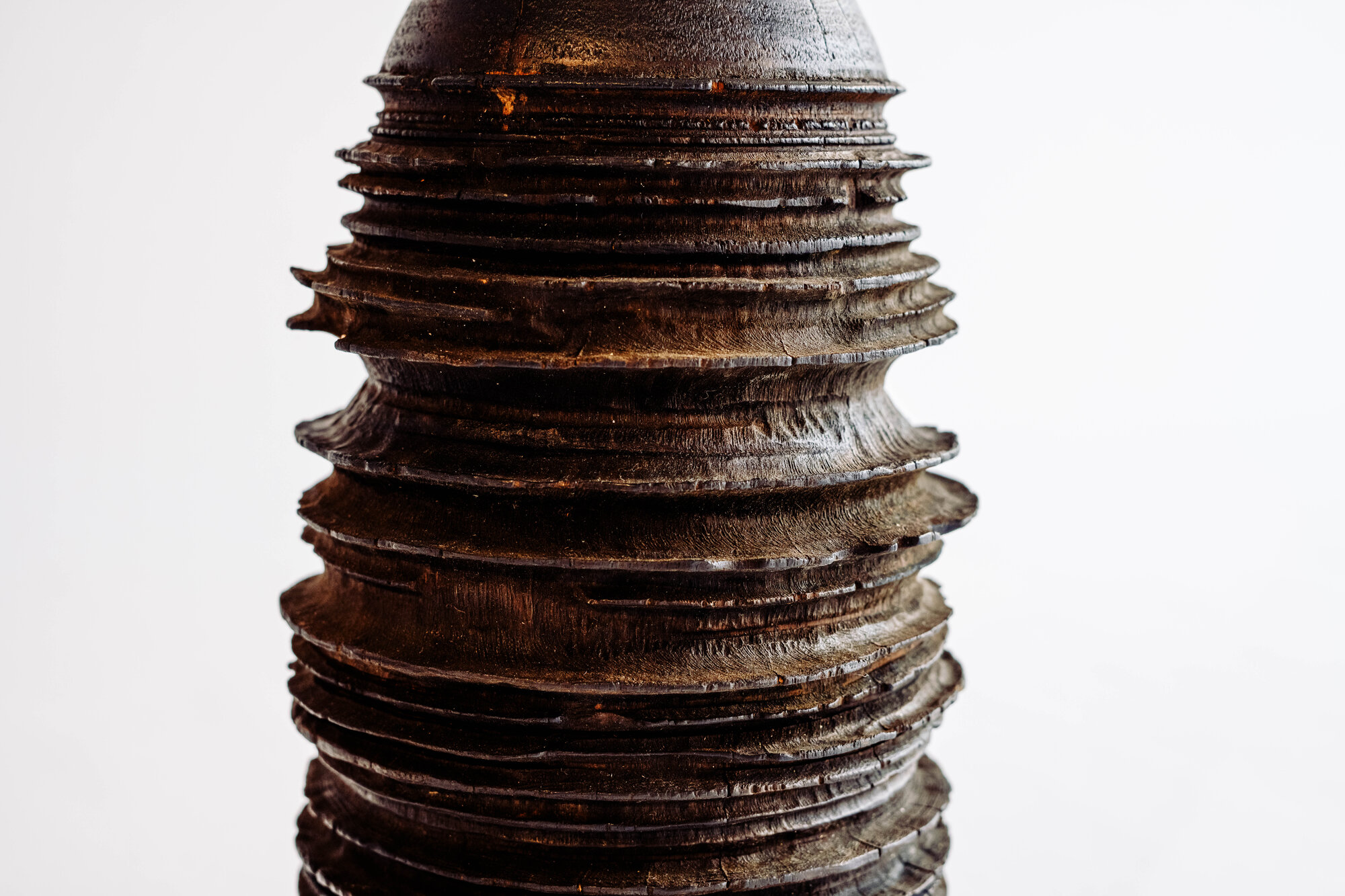
This tall hollow form features an uneven ribbed surface where the rhythm is repeatedly interrupted, creating a rough, energetic profile. Instead of smoothing the turning marks away, this busy, layered visual noise holds the evidence of making: cuts, ridges, and layers that disrupt the clean silhouette. The result is a form that feels alive, a bit chaotic, and pushed slightly out of order.
My making process begins with the material itself. Working primarily on the lathe, I turn solid wood into hollow sculptural forms, allowing grain, growth patterns, and resistance to guide the outcome. Turning something as raw as wood is both physical and contemplative, grounded in rhythm, touch, and a deep connection to the act of making by hand.
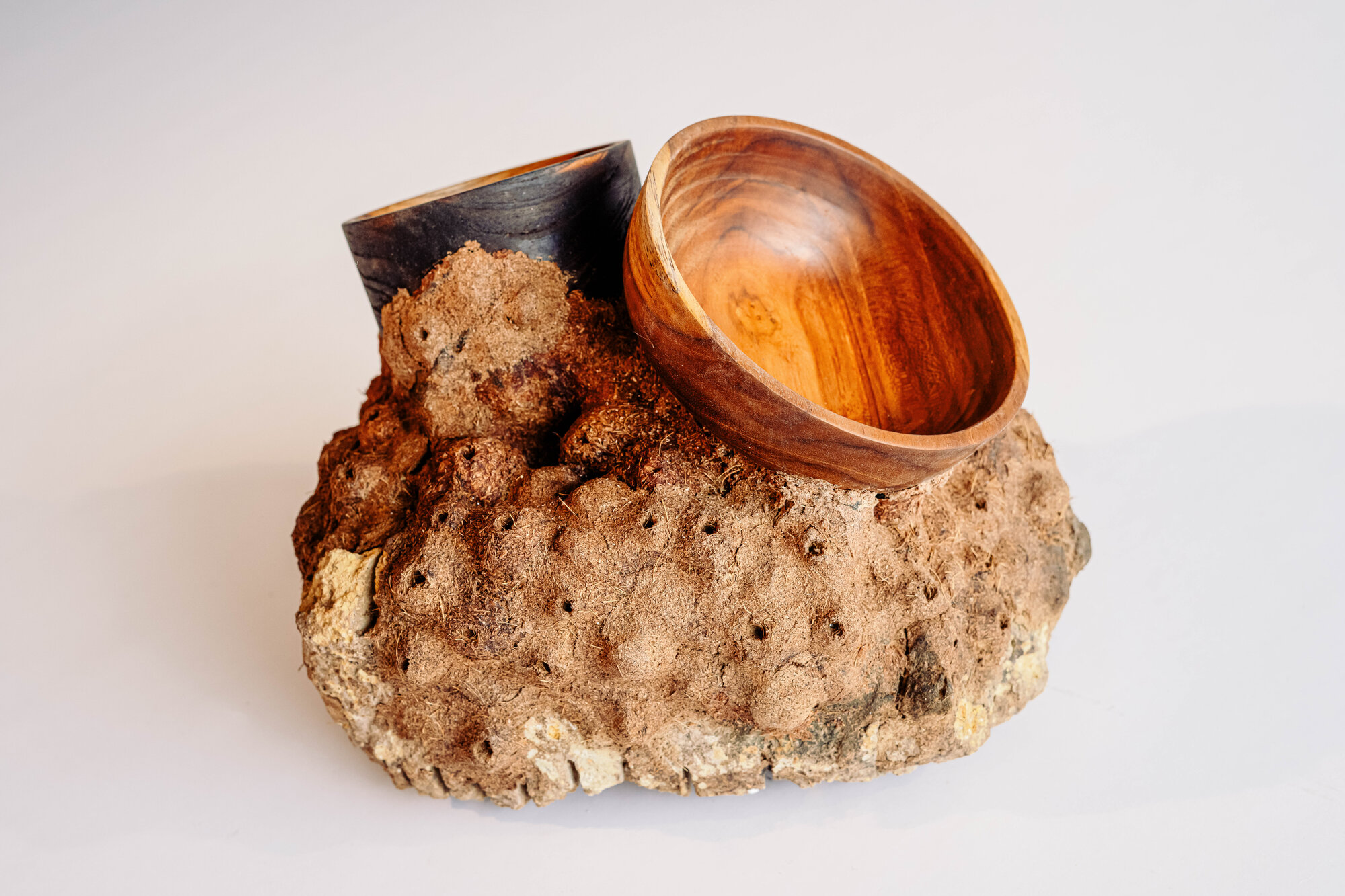
In recent works, I have expanded into a traditional sculpting paste inspired by Karnataka’s Kinnal craft. Bringing it into contemporary contexts allows me to merge past and present, refinement and rawness. Across mediums, I am interested in forms that feel lived-in, weathered, or unearthed, carrying traces of time, making, and memory. Whether turned, carved, or hand-built, the work aims to remain honest to its material origins and the slow processes that shape it.
reflection
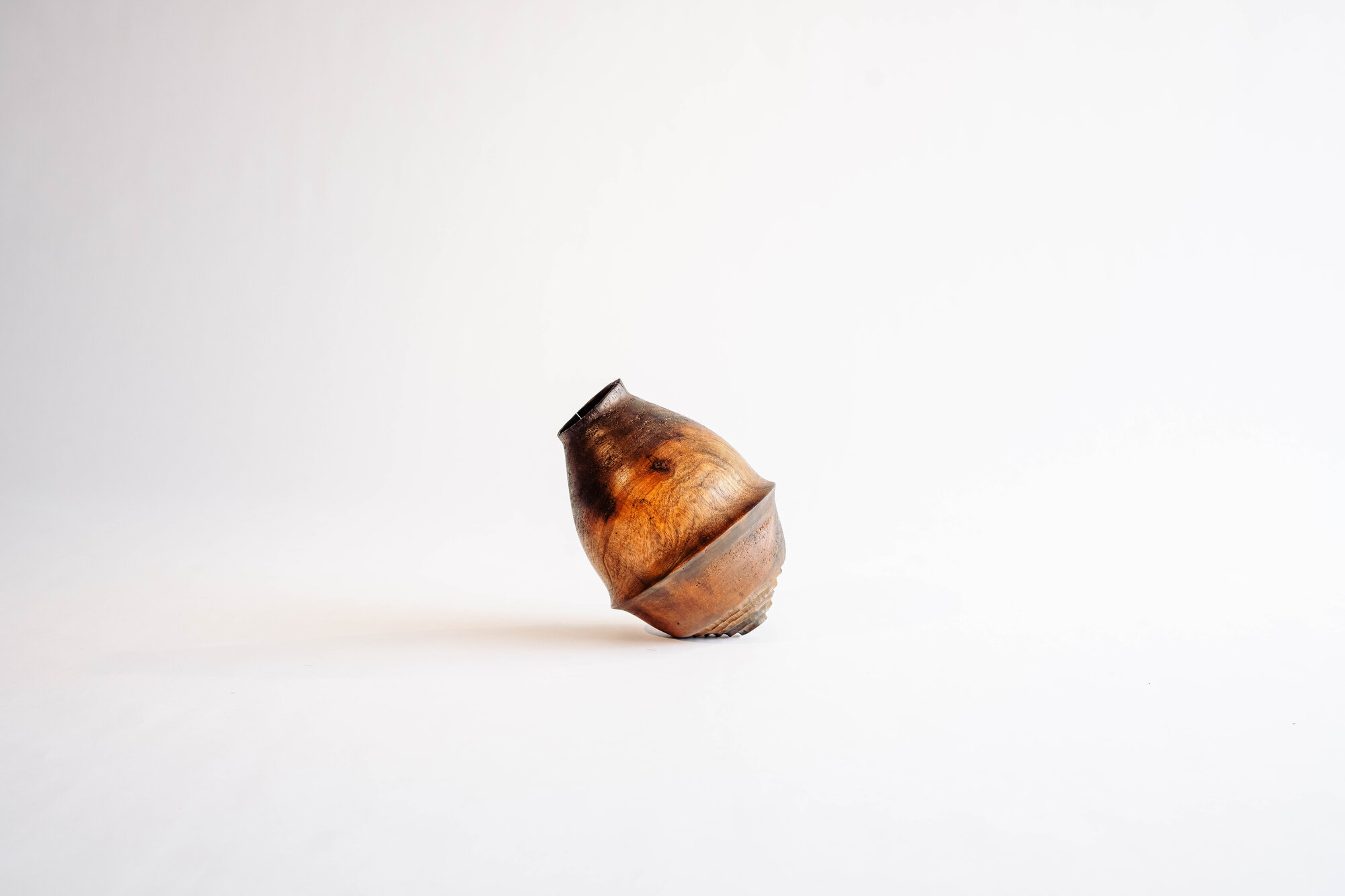
My wood-turned vessels are rooted in the idea of interiority; each form holds a hollow inner space shaped by time, pressure, and the memory of the tree itself. The grain, scars, and natural distortions become quiet records of a life once lived. In this sense, every vessel becomes a metaphor for the inner emotional worlds we each carry, unseen yet deeply complex.
The concept of Sonder aligns closely with this: the recognition that every individual, like every piece of wood, holds a private landscape of experiences, tensions, and quiet transformations. Through tilted forms and embedded elements, the works suggest moments of vulnerability, balance, and the quiet truths that sit beneath the surface.